Attraction to the opposite sex with 異性
Kanji Explanation: Difference and strangeness with 異
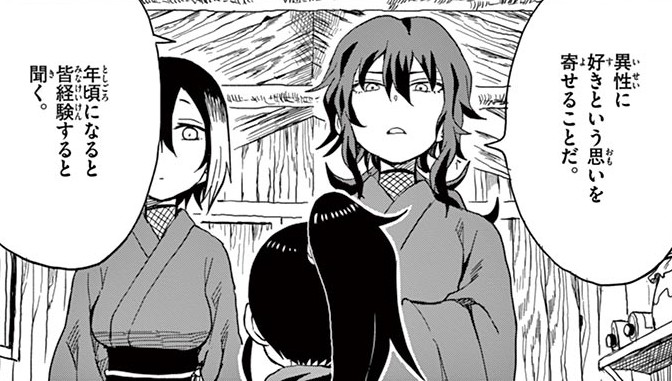
During a ninja training exercise, Tsubaki disguises herself as the teacher’s assistant in the hope of getting close enough to take the teacher’s mask. When the teacher unknowingly reveals that keeping boys and girls separate has been aided by lying to the female ninjas about men being scary, Tsubaki accidentally drops her disguise. The teacher has no choice but to take Tsubaki into her confidence and explain the reason for the separation, starting with the word “love”, of which Tsubaki is unfamiliar.
- ハナ先生:
- 「異性に好きという思いを寄せることだ。」
- “It means harboring feelings of affection for someone of the opposite sex.”
- 「年頃になると皆経験すると聞く。」
- “I hear that everyone goes through this when they reach a certain age.”
Key Points
-
異性 = the opposite sex
-
In this scene, 異性 means “people of the opposite sex” as a category, not one specific person
-
The kanji help make that clear: 異 means “different” and 性 refers to sex/gender
-
-
The sentence ends with ことだ to define the term
-
〜ことだ here is explanatory/definitional: The teacher is answering what “love” means
-
-
The follow-up line adds hearsay and age nuance
-
「年頃になると」 means “when one reaches that age”, usually the age where romantic awareness starts to appear
-
「皆経験すると聞く」 means “I hear everyone experiences it”, so the teacher is presenting this as something she has heard, not necessarily something she is speaking from personal experience
-