Don't want you to worry with 〜てほしくない
Grammar Explanation: Want you do to something with 〜てほしい
Kagetsu is overworking herself trying to write a song for her group’s upcoming performance.
With a typhoon passing by, she worries their outdoor stage may get ruined. Hototogisu offers to sneak out and check, and Mokuge goes with her.
Outside, Hototogisu says that Kagetsu stops humming when she’s worried, and it’s lonely without her humming.
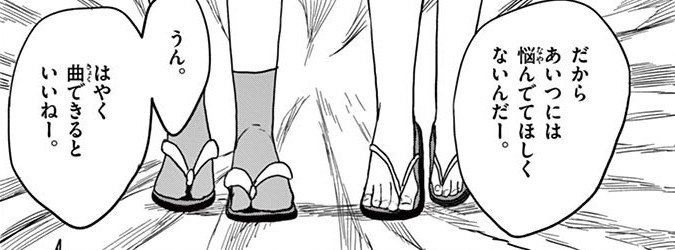
- ホトトギス:
- 「だからあいつには悩んでてほしくないんだー。」
- “That's why I don't wantherto be worring.”
- ムクゲ:
- 「うん。はやく曲できるといいねー。」
- “Mm-hmm. It'd be nice if she could finish her song quickly.”
Key Points
- 〜てほしくない expresses the speaker’s wish about someone else’s state
- 〜てほしくない is the negative of 〜てほしい and means “I don’t want someone to do …“
- あいつには identifies who Hototogisu is talking about
- あいつ is a casual, slightly rough “her / that person” used for someone not present
- In Ⓐに Ⓑてほしい, に marks the person who would do the action, so あいつに = “her” as the worrier
- The extra は adds a small contrast/topic nuance: “as for her …“
- だから and 〜んだ make it sound explanatory
- だから links this line to what was said just before; she stops humming when she’s worried, so Hototogisu feels this way
- The ending 〜んだ adds an explanatory, confiding tone rather than a flat statement
- 悩む here means ongoing emotional distress, not just a brief concern
- 悩む often suggests being mentally burdened, troubled, or preoccupied by something
- That fits this scene better than a lighter “worry” as Kagetsu is struggling over the song and the performance
- The て-form 悩んで connects that state directly to ほしくない