Hired to work for the summer with 〜ことになっている
Grammar Explanation: Past decision still in effect with 〜ことになっている
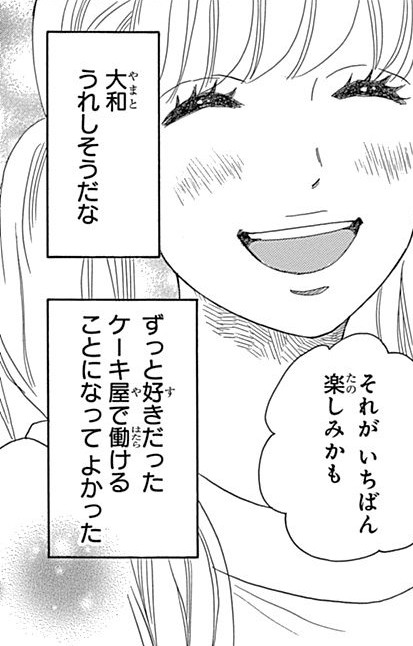
Rinko (Yamato) interviews for a summer job at her favorite cake shop. Following the interview, she is hired and is set to start work the next day. She’s excited at the various new techniques she’ll learn that she’ll use to make various sweets for her boyfriend, Takeo.
- 凛子:
- 「それがいちばん楽しみかも」
- “I think that's what I'm most looking forward to.”
- たけお:
- 「大和うれしそうだな」
- “Yamato looks happy.”
- 「ずっと好きだったケーキ屋で働けることになってよかった」
- “I'm glad it's arranged that she'll be able to work at her most favorite cake shop.”
Key Points
- ことになって = “it’s been decided/arranged that…” (て-form)
- ことになっている means “it has been decided/arranged that…” (a past decision still in effect)
- It often suggests the decision was made through external circumstances (like getting hired), not purely personal choice”
- ことになって is the て-form, used here to connect to よかった (“I’m glad”)
- Potential form
- The potential form 働ける (“able to work”) emphasizes the opportunity to work there (she can/is able to work there)
- Why て-form here
- The て-form ことになって connects the clause to よかった
- This creates a single thought: “Because it turned out this way, I’m glad”