I say that because it'd be impossible with だって
Grammar Explanation: That said with だって
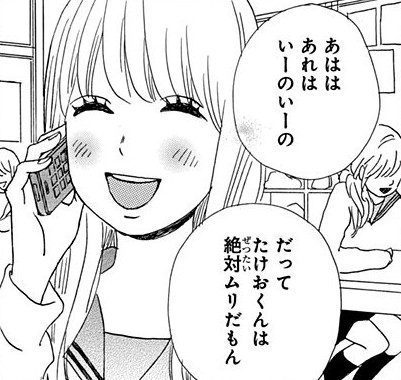
Takeo hopes to get into the same college as his girlfriend, Rinko. Going into a mock exam, he listed the top college Rinko is aiming for. However, the results came back saying it would be impossible for him to get into Rinko’s top choice.
Rinko tells Takeo she didn’t do well for that college either, so they should both aim for her second choice. Takeo asks if Rinko is okay with giving up on her top choice.
- 凛子:
- 「あはは あれはいーのいーの」
- “Ha ha, I'm okay with that.”
- 「だってたけおくんは絶対ムリだもん」
- “I say thatbecause it'd be impossible for you to go, Takeo.”
Rinko’s first choice was a women’s college, making her boyfriend, Takeo, ineligible to attend.
Key Points
- だって = “I say that because” (emphasizing a reason)
- In this context, だって introduces a reason or justification for what was just said
- Rinko is explaining why she’s okay with giving up her first choice college
- Pattern: だって + [reason] → “Because [reason]” (with emphasis on the justification)
- 絶対ムリ = “absolutely impossible”
- 絶対 means “absolutely” or “definitely”
- ムリ (also written as 無理) means “impossible” or “unreasonable”
- Together they form a strong emphatic phrase common in casual speech
- The complete pattern: だって + reason + だもん
- This combination is very common in casual Japanese
- It conveys: “I’m telling you, it’s because [reason]!” with emotional emphasis
- The speaker is both explaining and emphasizing their reasoning in a gentle, conversational way