Lame monkeys with ダサい
Vocabulary Explanation: Unfashionable with ダサい
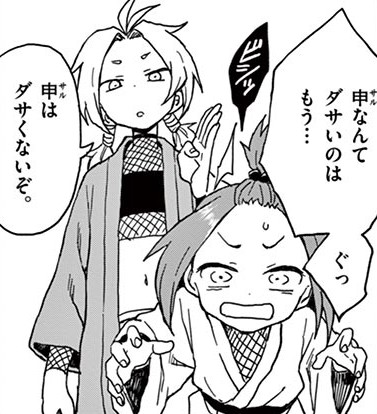
Housenka from the monkey squad appears before the dog squad, challenging them to a battle for their squad name. Before she can cause any trouble, Tsuwabuki and Mokuren from her squad appear to stop her. Housenka claims this is their chance to become the dog squad.
- ホウセンカ:
- 「申なんてダサいのはもう… ぐっ」
- “I'm over this lame monkey thing...gwa!”
- ツワブキ:
- 「申はダサくないぞ。」
- “Monkeys are not lame.”
Key Points
- ダサい = “lame / uncool” as a squad-name complaint
- Here, ダサい is not just about fashion; Housenka means the name 「申」 sounds embarrassing and uncool for their squad
- That is why “lame” fits this scene better than a more neutral gloss like “unfashionable”
- 申なんて = “something like ‘monkeys’…” (dismissive)
- なんて after a noun can sound dismissive, like “something like … / … of all things”
- So 申なんて frames the squad name itself as beneath her: “monkeys, of all things …”
- 申はダサくないぞ = direct rebuttal
- ダサくない is the regular negative of an い-adjective: ダサい → ダサくない
- 申は sets up “as for monkeys …”, directly countering Housenka’s complaint
- ぞ makes Tsuwabuki’s reply blunt and forceful: “Monkeys are not lame.”