Staying with relatives with 〜先
Vocabulary Explanation: Place where something is done with 〜先
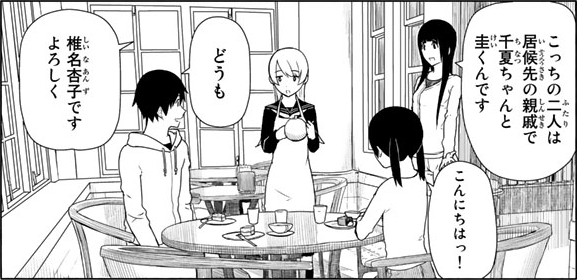
Makoto introduces Chinatsu and Kei as her two relatives she’s lodging with.
- 真琴:
- 「こっちの二人は居候先の親戚で千夏ちゃんと圭くんくんです」
- 千夏:
- 「こんにちはっ!」
- 圭くん:
- 「どうも」
- 杏子:
- 「椎名杏子です よろしく」
Key Points
-
居候先 = “the place where someone is staying”
-
〜先 marks the place where something is done, so 居候先 means the home or household where someone is lodging
-
居候 adds the nuance of staying at someone else’s place and depending on their hospitality, not just staying there neutrally
-
-
居候先の親戚 = “the relatives I’m staying with”
-
The の links 居候先 to 親戚, literally: the relatives of the place/household where I’m lodging
-
In natural English, that becomes the relatives I’m staying with rather than a stiff literal phrasing like the relatives of my lodging place
-
-
Casual pointing word: こっち
-
こっち literally means this way / this side, but in conversation it often works like these two here when introducing nearby people
-