Timed explosion with 時限爆弾
Kanji Explanation: Boundaries and limits with 限
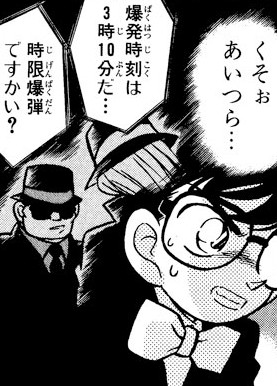
Conan overhears Gin and Vodka discuss a bomb they’ve planted. There’s little time left for Conan to find the bomb and get it off the bullet train before it explodes. As he tries to determine who is unknowingly carrying the bomb, he thinks back to what the two had said.
- ジン:
- 「爆発時刻は3時10分だ...」
- “The explosion time is 3:10.”
- ウォッカ:
- 「時限爆弾ですかい?」
- “Is it a time bomb?”
Key Points
-
時限 = a fixed time limit or timer setting
-
In compounds, 時限 refers to a time that has been preset or fixed in advance
-
The 限 part contributes the idea of a limit / set boundary, so this is not just “time” in general, but a time with a built-in cutoff
-
-
時限爆弾 = “time bomb” in this scene
-
時限爆弾 literally combines 時限 + 爆弾, so it means a bomb set to explode at a predetermined time
-
In English, “time bomb” is the most natural translation here
-
-
The first line sets up the second
-
爆発時刻は3時10分だ gives the exact detonation time, so the follow-up question naturally becomes “Is it a time bomb?”
-
時刻 means a specific clock time or appointed time, which matches the idea of a bomb triggered on a schedule
-
-
ですかい = a rougher, characterful version of ですか
-
ですかい is a casual, old-fashioned-sounding question ending; here it adds a gruff underling or gangster-like tone
-
The omitted subject is understood from context: (それは) 時限爆弾ですかい?
-