Unable to fall asleep after a horror movie with 目が冴える
Idiom Explanation: Wide awake with 目が冴える
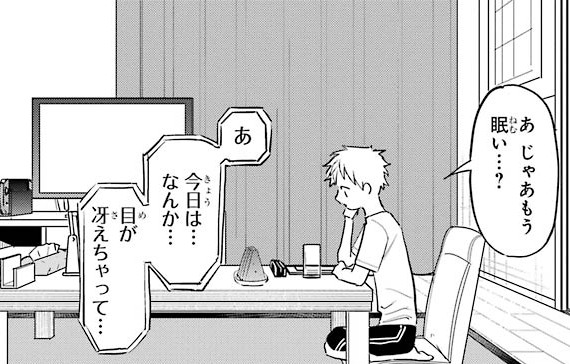
Komura and his mother watch a late-night horror movie. After his mother heads off to bed, Komura texts with Mie from class, who had also watched the movie with her father. The two switch to a phone call, and after a bit the subject of bedtimes comes up. Normally Mie can’t keep awake as late as Komura does.
- 小村:
- 「あ じゃあもう眠い…?」
- “Ah, then right now you're sleepy?”
- 三重:
- 「あ 今日は… なんか… 目が冴えちゃって…」
- “Ah, today I'm somewhat unable to fall asleep.”
Key Points
-
目が冴える = “to become wide awake”
-
Here 目が冴える means she has become so mentally alert that she cannot drift off easily
-
It does not mean her eyes literally look clear or sharp; the idiom is about being unexpectedly awake
-
In this scene, the natural reading is: “I’m kind of wide awake” or “I can’t really fall asleep”
-
-
Casual contraction: 冴えちゃって = 冴えてしまって
-
〜ちゃって is a casual spoken contraction of 〜てしまって
-
Here 目が冴えちゃって suggests “I ended up getting wide awake”
-
In this line, 〜てしまう does not sound strongly regretful; it mainly conveys an unintended result
-
-
今日は… なんか… = soft, hesitant setup
-
今日は marks today as an exception to the usual situation
-
なんか softens the statement and gives it a vague “somehow / kind of” nuance
-
The pauses make her sound like she is feeling out how to describe it, not making a firm explanation
-
-
Trailing て-form: 目が冴えちゃって…
-
The sentence trails off after the て-form, leaving the rest implied
-
This unfinished ending sounds natural in conversation because the listener can easily infer the rest
-