Distracting oneself with 気を紛らす
The expression 気を紛らす is used to describe the act of deliberately diverting one’s attention away from something unpleasant (such as worries, sadness, loneliness, or anxiety) by focusing on something else. It conveys an active, self-directed effort to seek relief from negative feelings. Similar expressions in English include “take one’s mind off things”, “distract oneself”, “keep oneself occupied”, and “divert one’s attention”.
Literal Meaning
This expression literally translates as “to scatter or mix up one’s spirit”. The word 気 represents one’s spirit, mind, or feelings, while 紛らす means to confuse, mix up, or divert.
Usage
It is commonly used when someone tries to cope with difficult emotions by staying busy or finding an activity to engage in, such as listening to music, going for a walk, or talking to a friend to avoid dwelling on something troubling. Unlike 気が散る, which describes being involuntarily distracted, 気を紛らす implies a conscious, deliberate effort.
Dictionary Definition
心配や悲しみなどの気持ちを、他のことに注意を向けることで忘れようとする。
To try to forget feelings such as worry or sadness by turning one's attention toward something else.
Claude Sonnet 4.6
Examples
Reading a book to distract from waiting for a text message with 気を紛らす
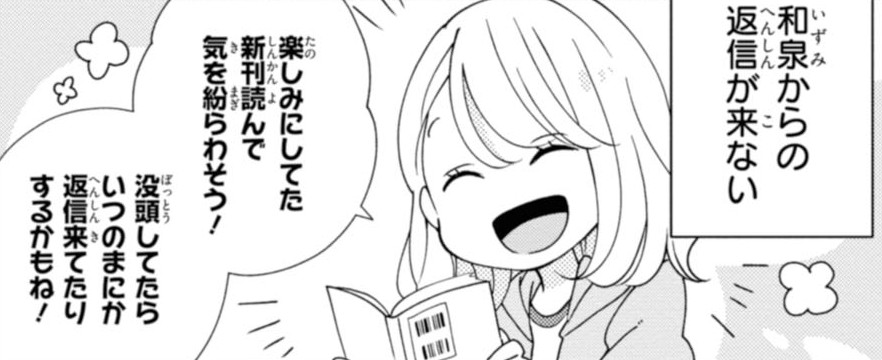
Akari is expecting a text message from Izumi. Unknown to her, Izumi’s response was getting too long, so he switched to his computer to write up an e-mail instead.
- Narration:
- 「和泉からの返信が来ない」
- “I haven't received a reply from Izumi.”
- あかり:
- 「楽しみにしてた新刊読んで気を紛らわそう!」
- “I'll distract myself by reading the new book I've been looking forward to!”
- 「没頭してたらいつのまにか返信来てたりするかもね!」
- “Maybe if I get really absorbed in it, the reply will show up before I know it!”