Difference and strangeness with 異
異 has a meaning of standing apart from the ordinary. The core meanings are different and strange.
From this sense of being unlike what is normal, 異 extends to other, unusual, abnormal, and even ideas or beliefs that diverge from the accepted norm.
Common Words
異常: Abnormality
異常 means abnormality, something unusual, or a condition outside the normal range. It can describe suspicious behavior, malfunctions, medical abnormalities, or simply something so excessive that it feels out of the ordinary.
Depending on context, it can mean either abnormal in a negative sense or extraordinary in degree.
It combines 異 (different) with 常 (usual) to show something unlike the ordinary.
Nothing out of the ordinary with 異常
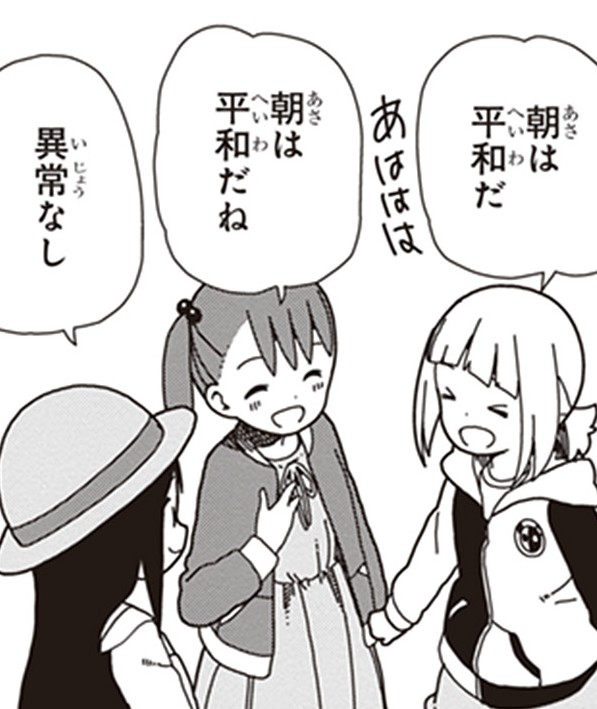
Yui, Sacchan, and Kotoha go on an early-morning patrol to check for any issues in their neighborhood. Because it’s so early, none of the shops are open yet, and the streets are empty.
- さっちゃん:
- 「朝は平和だ」
- “Morning is peaceful.”
- 結衣:
- 「朝は平和だね」
- “Morning is peaceful, isn't it?”
- 琴葉:
- 「異常なし」
- “No abnormalities.”
異世界: Other world
異世界 means another world or otherworld, especially a fantastical world separate from ordinary reality.
In modern Japanese it is strongly associated with fantasy and isekai stories in which someone is transported to or reborn in a different world.
It combines 異 (other) with 世 (world) and 界 (boundary or world) to show another world separate from ordinary reality.
In another world with 異世界
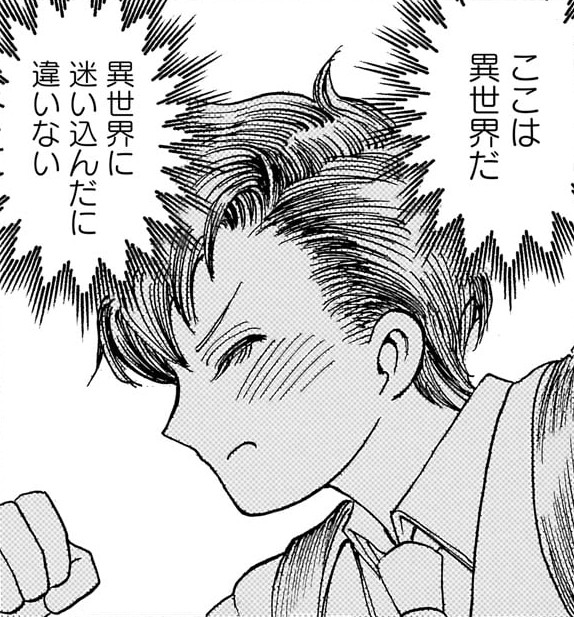
Zen lived in a glittering, idyllic town until his family moved. During his first day of school, he found everyone to be glaring and rugged. Rather than being gentle and playful, his classmates sought a brawl and chased after him.
- 禅:
- 「ここは異世界だ」
- “This is another world.”
- 「異世界に迷い込んだに違いない」
- “I must have wandered into another world.”
異性: Opposite sex
異性 means the opposite sex, that is, people of a different sex from oneself. It is common in discussions of romance, attraction, friendship, and social interaction.
It combines 異 (other) with 性 (sex or nature) to show the other sex.
Attraction to the opposite sex with 異性
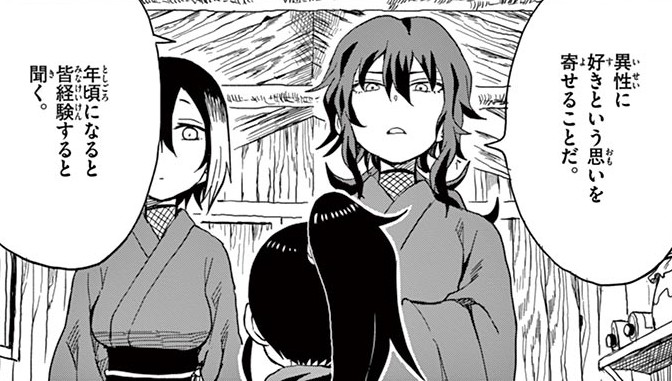
During a ninja training exercise, Tsubaki disguises herself as the teacher’s assistant in the hope of getting close enough to take the teacher’s mask. When the teacher unknowingly reveals that keeping boys and girls separate has been aided by lying to the female ninjas about men being scary, Tsubaki accidentally drops her disguise. The teacher has no choice but to take Tsubaki into her confidence and explain the reason for the separation, starting with the word “love”, of which Tsubaki is unfamiliar.
- ハナ先生:
- 「異性に好きという思いを寄せることだ。」
- “It means harboring feelings of affection for someone of the opposite sex.”
- 「年頃になると皆経験すると聞く。」
- “I hear that everyone goes through this when they reach a certain age.”
異様: Strangeness
異様 means bizarre, eerie, or strange in appearance, atmosphere, or behavior. It describes something that feels conspicuously off, uncanny, or unsettling to an observer.
It combines 異 (strange) with 様 (appearance) to show a strange appearance or manner.
Strange behavior with 異様
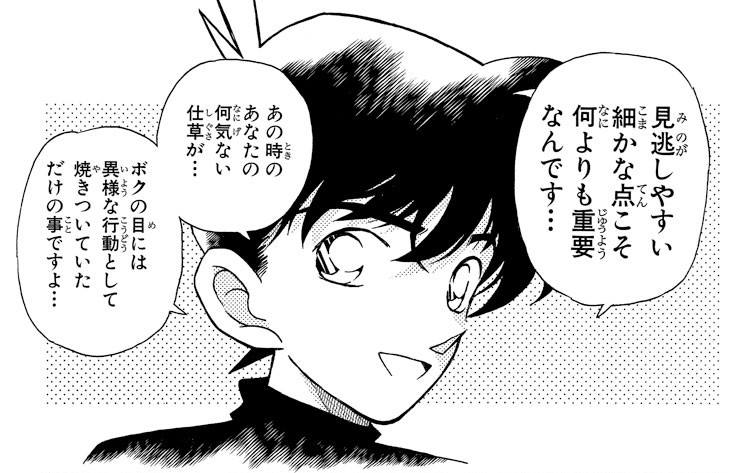
Shin’ichi reveals the details of a murder. The culprit asks how Shin’ichi discovered the hidden weapon, and he explains it was due to a specific movement the culprit made.
- 新一:
- 「見逃しやすい細かな点こそ何よりも重要なんです…」
- “It's precisely those subtle details that are easy to overlook that matter most of all...”
- 「あの時のあなたの何気ない仕草が…」
- “That casual gesture of yours back then...”
- 「僕の目には異様な行動として焼きついてただけの事ですよ…」
- “It's just that it was etched in my mind as strange behavior...”