Sending and escorting with 送
The etymology of 送 suggests a meaning of sending or escorting.
These core meanings extend to various contexts including dispatching objects, transmitting information, seeing people off, and accompanying someone on their journey. The kanji emphasizes the act of causing something or someone to move from one place to another.
Etymology
This kanji is a phono-semantic compound comprised of 辶 (movement radical, “to walk”) and 关 (phonetic component). The movement radical invokes imagery of traveling or going, while the phonetic component provides the sound (ソウ).
The meanings of sending and escorting are clear from this imagery of movement and travel. From these core meanings, the kanji extends to include transmitting (sending information), dispatching (sending goods), broadcasting (sending signals), and seeing off (escorting someone on departure).
Common Words
輸送: Transport
輸送 means to transport, typically referring to large-scale movement of goods, materials, or people. This is more formal and industrial than simple “sending”.
It’s used for military logistics, cargo shipping, mass transit, and supply chain contexts.
It combines 輸 (transport) with 送 (send) to show transporting and sending goods or people in organized fashion.
Transporting delicate glassware with 輸送
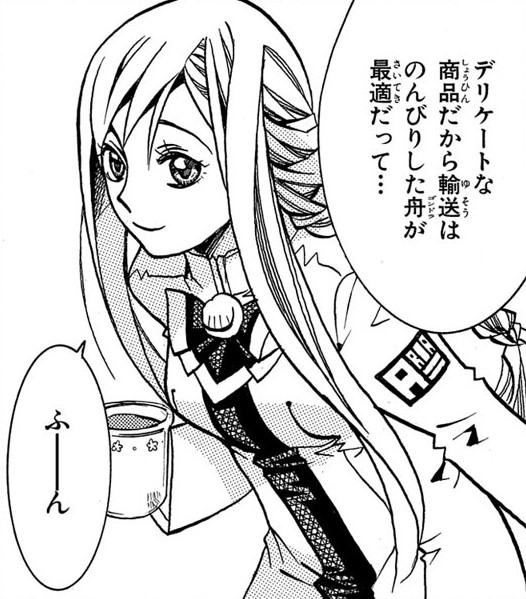
Akari receives her first commission as an Undine gondolier, but rather than taking someone sightseeing, it’s for transporting glassware.
- 灯里:
- 「デリケートな商品だから輸送はのんびりした船が最適だって…」
- “Since it's a delicate item, a slow-moving gondola is the best for transport...”
輸送 is used here to refer to the shipment of cargo.
送迎: Picking up and dropping off
送迎 means picking up and dropping off, typically referring to the service of collecting and returning people from a location. This is commonly used for shuttle services, airport pickups, or school transportation.
The term encompasses both directions of travel: bringing someone to a place and then taking them back.
It combines 送 (send (off)) with 迎 (welcome) to show both seeing someone off and going to meet them.
Bus pickup and drop off with 送迎
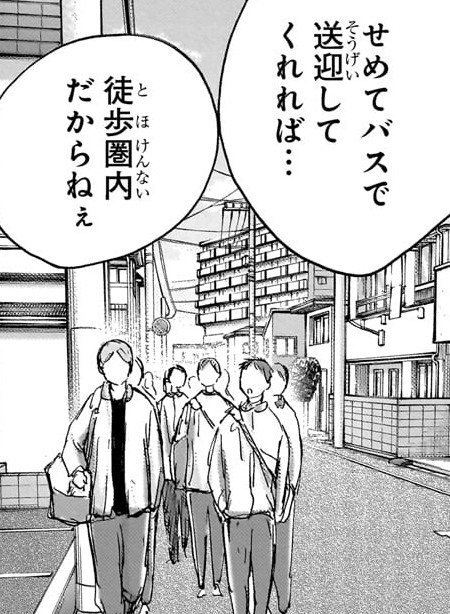
After school, the girls’ basketball team walks to the location where they’re practicing for an upcoming match.
- 生徒:
- 「せめてバズで送迎してくれれば…」
- “If only they’d at least provide a bus to pick us up and drop us off”
- 生徒:
- 「徒歩圏内だからねぇ」
- “It's within walking distance, after all.”
郵送: Mailing
郵送 means to mail or send by post, specifically referring to using postal services to send letters, packages, or documents. This is distinct from private delivery services (宅配).
It combines 郵 (mail) with 送 (send) to show sending via postal service.
Receiving exam results by mail with 郵送
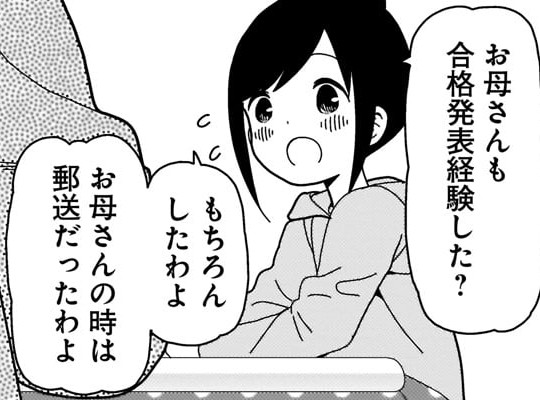
Bocchi’s mother confirms with Bocchi that her exam results will be available online.
- ぼっち:
- 「お母さん合格発表経験した?」
- “Mom, have you ever been through the experience of waiting for exam results?”
- お母さん:
- 「もちろんしたよ」
- “Of course!”
- 「お母さんの時は郵送だったわよ」
- “Back in my day, it was sent by mail.”
郵送 marks the method of delivery as being sent through the postal service, as opposed to Bocchi’s results being accessible electronically.
放送: Broadcast
放送 means to broadcast or transmit, especially radio or television programs. It involves sending audio or visual content to a wide audience through electronic means.
It combines 放 (release) with 送 (send) to show releasing and sending out signals or content to the public.
Broadcasting music at school with 放送
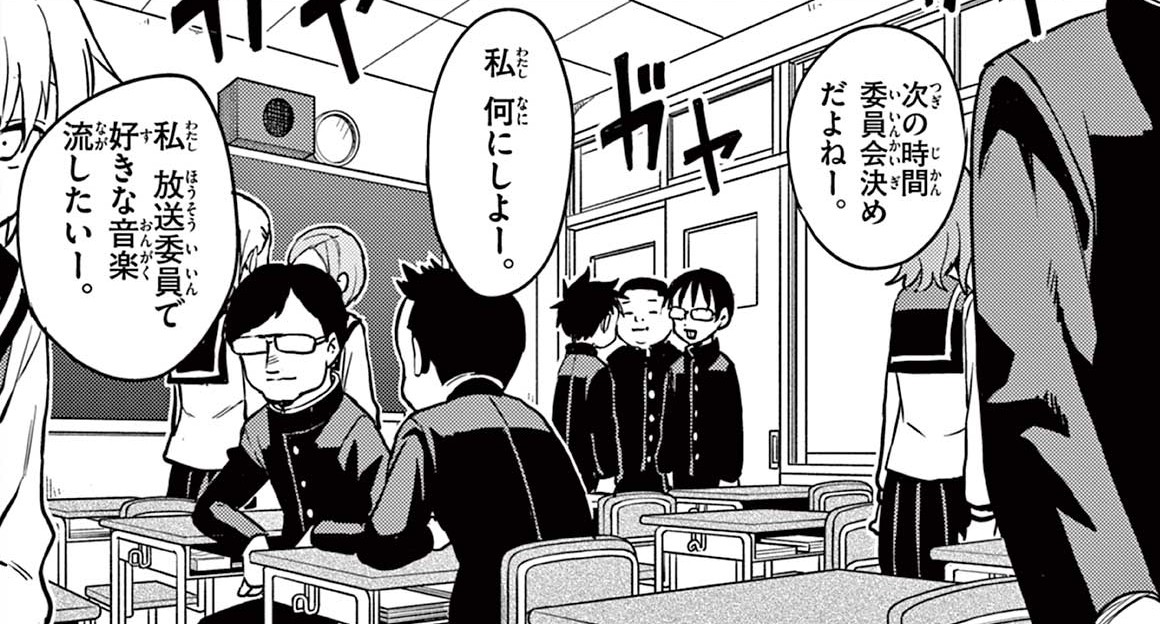
Nishika and Takagi’s class discussion what committees they plan to join.
- 生徒:
- 「次の時間委員会決めだよねー。」
- “Next up is deciding the committee schedule, right?”
- 生徒:
- 「私 何にしよー」
- “What should I pick?”
- 生徒:
- 「私 放送委員で好きな音楽流したいー。」
- “I want to play my favorite music as a member of the broadcasting committee.”
放送 here refers to the transmission over the school’s broadcast system.
送信: Transmission
送信 means to transmit or send, typically referring to electronic communication such as emails, text messages, or data transmission. This emphasizes the technical act of sending information from one point to another.
It combines 送 (send) with 信 (message) to show sending a message or communication.
Sending a text message with 送信
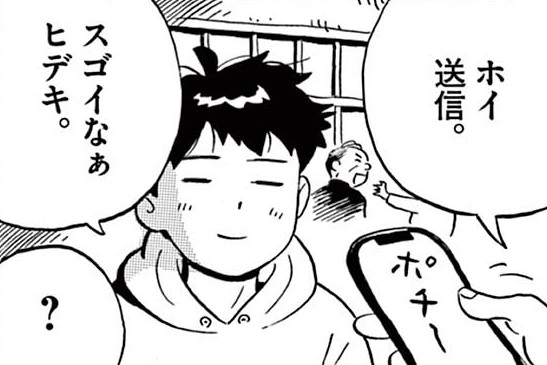
Hiroto is having dinner with his friend Hideki. After Hideki reveals that his wife is going to have a baby, he looks down at his phone and sees a text message he needs to respond to.
- ヒデキ:
- 「ホイ 送信。」
- “And...sent.”
- ヒロト:
- 「スゴイなぁ ヒデキ。」
- “You're amazing, Hideki.”
送信 is typically used for electronic transmissions, such as the text message sent here.