Underutilized talent with 才能
Kanji Explanation: Ability and capability with 能
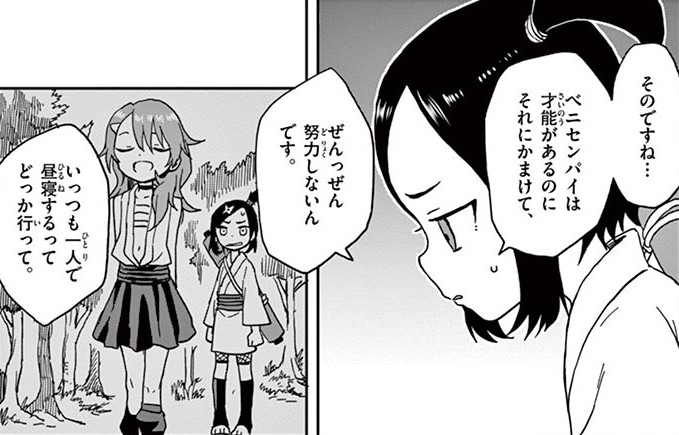
During a free day from training, Touwata and Mizubashou approach Tsubaki to request a favor. She would like Tsubaki to challenge Benisumomo to a one-on-one fight.
- トウワタ:
- 「そのですね… ベニセンパイは才能があるのにそれにかまけて、ぜんっぜん努力しないんです。」
- “Well, you see... Beni-senpai has talent, but she takes it for granted and doesn't put in any effort at all.”
- 「いっつも一人で昼寝するってどっか行って。」
- “She always go off somewhere to take a nap alone.”
Key Points
-
才能 = “talent” here means natural ability
-
才能 refers to innate aptitude rather than a skill someone mainly built through practice
-
Here, ベニセンパイは才能がある sets up the complaint: Beni-senpai already has the natural ability
-
-
それにかまけて = “resting on that” and neglecting other effort
-
Ⓐにかまけて means “to get wrapped up in Ⓐ and neglect something else”
-
それ refers back to 才能, so the idea is: she is coasting on her talent
-
A natural full reading is: 才能があるのに、それにかまけて、努力しない → “Even though she has talent, she leans on that and doesn’t make an effort.”
-
-
いっつも…ってどっか行って is very casual spoken narration
-
いっつも is a casual, chatty version of いつも
-
一人で 昼寝するって uses って as a casual quote marker: “saying she’s going to nap alone”
-
どっか is casual どこか (“somewhere”), and どっか行って means she goes off somewhere
-
A fuller reconstruction is: 『一人で 昼寝する』って、どこかへ行って。
-