Reaping what you sow with 自業自得
自業自得 means “you reap what you sow” or “getting what one deserves”. It describes a situation where someone experiences consequences (usually negative) as a direct result of their own actions.
Breaking Down the Kanji
- 自 = self, oneself
- 業 = deed, karma, action
- 自 = self, oneself (repeated)
- 得 = obtain, get, acquire
Literally, it means “one’s own deeds, one’s own gain”, emphasizing that what you receive is the result of what you’ve done.
Usage Notes
While the definition includes both good and bad consequences, 自業自得 is predominantly used for negative outcomes. It’s often said when someone faces trouble or misfortune due to their own poor choices or bad behavior.
The phrase carries a sense that the consequence was predictable or deserved, similar to expressions like:
- “You made your bed, now lie in it”
- “You have only yourself to blame”
- “Serves you right”
Buddhist Origins
This term originates from Buddhist philosophy, where 業 (karma) refers to the spiritual principle that one’s actions determine one’s fate. In this context, 自業自得 represents the idea that individuals are responsible for their own karma and its consequences.
Dictionary Definition
自分の行った善悪の行為が、その報いとして自分に返ってくること。
The good or evil actions one has committed come back to oneself as retribution.
Claude Sonnet 4.5
Examples
A groper's condemnation with 自業自得
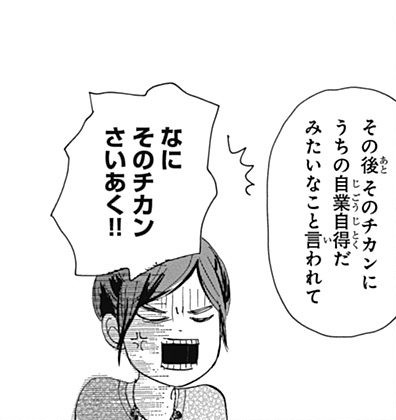
Rinko tells Saijou how she first met Takeo through her encounter with a groper on the train. It was Takeo who came to her rescue.
- 凛子:
- 「その後 そのチカンにうちの自業自得だみたいなこと言われて」
- “After that, the groper essentially told me it was my own fault.”
- 西城:
- 「なに そのチカン さいあく!!」
- “What?! That groper is the worst!”