Boundaries and limits with 限
The kanji 限 has the meaning of a marked stopping point at an edge. The core meanings are limit and boundary.
From this, 限 extends naturally to ideas like restrict, cap, and finite. Once a boundary is drawn, something can be kept within it.
Etymology
This kanji is a phono-semantic compound comprised of 阝 / 阜 (mound, embankment) as the semantic component and 艮 (a person looking back) as the phonetic component, giving the on-reading ゲン. These invoke imagery of reaching the edge of an embankment and being forced to stop there.
The meanings of limit and boundary are clear from this imagery. A raised edge creates a visible dividing line, and the sense of stopping at that line leads naturally to restrict and cap. From there, 限 also comes to describe things that are finite: they have an endpoint and do not continue past the boundary.
Common Words
限界: Limit
限界 means a limit, boundary, or breaking point. It is used for the furthest extent of what a person, method, system, or object can handle or achieve.
It often implies that pushing any further would no longer be possible or would cause something to fail.
It combines 限 (boundary) with 界 (border) to show a boundary line or outer limit.
The limit of teamwork with 限界
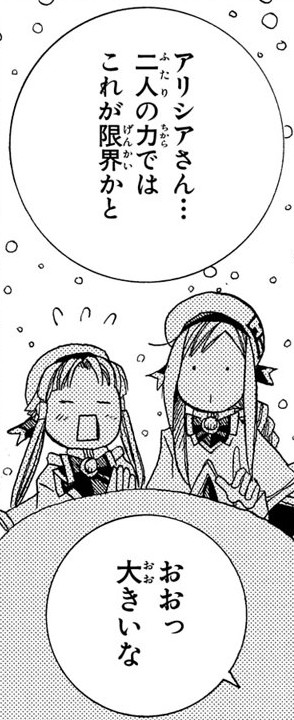
On a snowy day, Alicia starts making a snowball. As it gets bigger, Akari joins in. They continue to roll the snowball until it grows too big for them to keep pushing. At that moment, a random person passing by notices their effort.
- 灯里:
- 「アリシアさん… 二人の力ではこれが限界かと」
- “Alicia... This is the limit of what we can do together.”
- 男:
- 「おおっ 大きいな」
- “Oh! That's a big one.”
門限: Curfew
門限 means a curfew, especially the time by which someone must return home or pass through the gate. It originally evokes the threshold of a gate, and in modern usage it usually refers to a household or dormitory curfew.
It combines 門 (gate) with 限 (boundary) to show a boundary set at the gate.
Case closed at curfew time with 門限
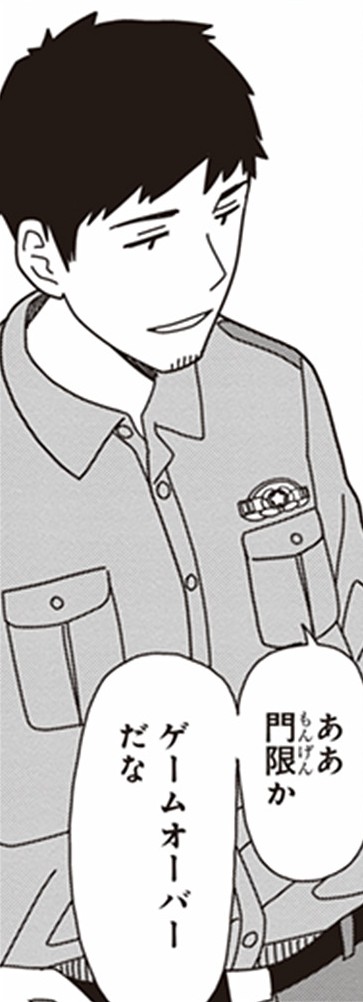
After finding evidence of a UFO encounter, the group Colors sets out to find aliens. The case is cut short when the 5PM bell chimes, signalling that the young trio has to head home for the day.
- 斎藤:
- 「ああ門限か。ゲームオーバーだな」
- “Ah, curfew time? I suppose it's Game Over.”
期限: Deadline
期限 means a deadline, due date, or predetermined fixed period. It is used for official deadlines, assignment due dates, response windows, and expiration-related time limits.
The word emphasizes that a clear endpoint has been set in advance and that something must be done, submitted, or used before that point.
It combines 期 (set time) with 限 (limit) to show a fixed time boundary or deadline.
Challenge deadline with 期限
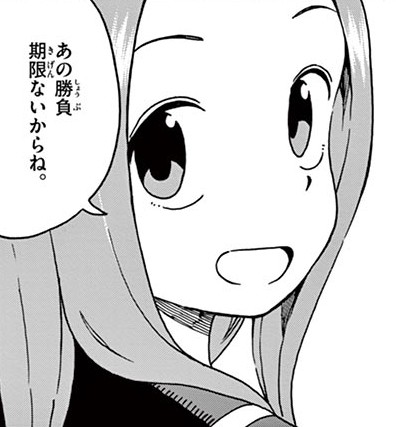
During their walk home after school, Takagi presents Nishikata with an impossible challenge. When he pushes back against it, she comes up with a new challenge, which Nishikata loses. As the two reach the point where they part ways, Takagi stops for a moment.
- 高木:
- 「あの勝負期限ないからね。」
- “There's no deadline for that challenge.”
限定: Limitation
限定 means limiting, restriction, or being limited to a certain range or group. It is common in phrases like member-only access, regional exclusives, or limited-edition products.
As a する-verb, it means to restrict or qualify something. As a noun or modifier, it often marks something as exclusive or limited.
It combines 限 (limit) with 定 (fix) to show something fixed within clear bounds.
Limited edition with 限定
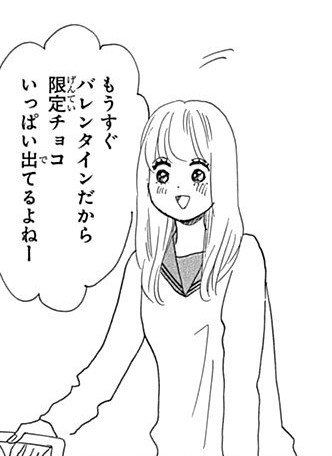
Takeo and Rinko meet up after school and stop somewhere for a drink and to chat. Rinko brings up February 14th, which is right around the corner.
- 凛子:
- 「もうすぐバレンタインだから限定チョコいっぱい出てるよねー」
- “Since it's almost Valentine's, a lot of limited edition chocolates have come out.”
制限: Restriction
制限 means a limit or restriction placed on something. It is used for rules, controls, and imposed caps such as age restrictions, speed limits, or usage limits.
As a する-verb, it means to limit or restrict actively.
It combines 制 (control) with 限 (limit) to show a controlled restriction.
Limited time to catch with 制限時間
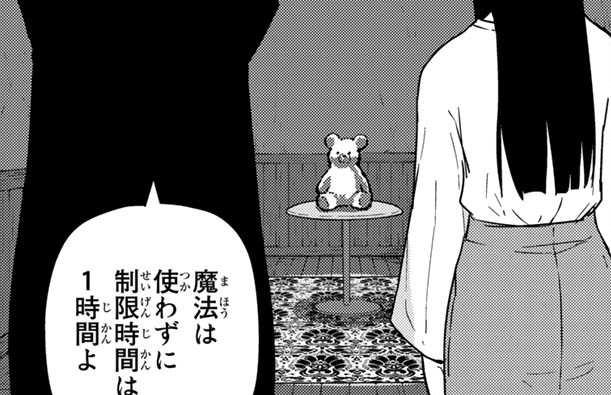
As a form of exam, Makoto is tasked with catching a plush bear that’s skilled at escaping.
- 支部長:
- 「魔法は使わずに制限時間は1時間よ」
- “Your time limit is one hour during which you cannot use magic.”
時限: Time limit
時限 means a fixed time limit or a period with a defined duration. It is used when something is restricted to a certain time frame, and it also appears in compounds.
The word emphasizes that the boundary involved is a boundary in time.
It combines 時 (time) with 限 (limit) to show a time boundary or fixed time period.
Power switch pulled by a timing device with 時限装置
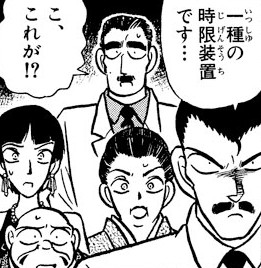
Two murders on a yacht leave the passengers on edge. A blackout occurs followed by another attempted murder. This should narrow down the list of suspects to those who weren’t gathered in the dining room. However, Detective Kogoro finds the power switch had a weight tied to it by rope, with a candle having burned the rope to drop the weight. This allowed the power to be turned off unattended.
- 小五郎:
- 「一種の時限装置です」
- “It's a timing device of sorts.”