Separating and understanding with 解
The etymology of 解 suggests a meaning of separate or remove.
Separting something complex into simpler parts gets the additional meanings of explain and understand.
Etymology
This kanji is an ideogramic compound comprised of 角 (horn), 刀 (knife), and 牛 (cow). These invoke imagery of a knifeseparating a horn from a cow.
The meanings of separate and remove are clear from this imagery. Imagine using the knife to open the cow, allowing you to understand and explain the cow’s internal structure.
Mnemonics
WaniKani and Migaku both create a mnemonic from 角 (corner), 刀 (knife), and 牛 (cow) to derive unravel. WaniKani extends the mnemonic with the word kayak for the common on reading かい.
Common Words
解体: Dismantling
解体 means to dismantle, demolish, or disassemble something. It can refer to physically breaking something down, like a machine or a building, or metaphorically deconstructing a concept or system.
It combines 解 (separate) with 体 (body) to show an undoing of the structure or dismantling of the body.
Demolishing the movie theater with 解体
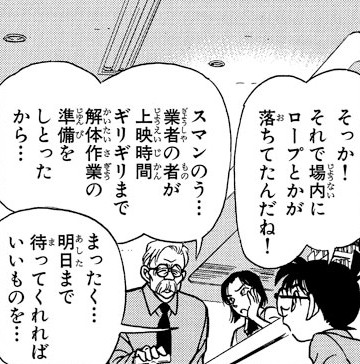
Conan and his friends go to the theater to see a movie. There, they discover this is the last day before the theater closes.
- コナン:
- 「そっか!それで場内にロープとかが落ちてたんだね!」
- “Oh, I see! That's why there were ropes and stuff lying around the venue!”
- オーナー:
- 「スマンのう… 業者の者が上映時間キリキリまで解体作業の準備をしとったから…」
- “Sorry about that... The contractor's crew was rushing to get the dismantling ready right up until showtime...”
- スタッフ:
- 「まったく… 明日まで待ってくれればいいものを…」
- “Honestly... They could've at least waited until tomorrow...”
解体 refers to the demolition work preparing to be done.
理解: Understanding
理解 means to understand, comprehend, or grasp the meaning of something. It involves interpreting information, grasping concepts, and recognizing relationships. This is in contrast to simple memorization.
It combines 理 (reason) with 解 (understand) to show an understanding from reasoning.
Understanding my resolve as a man with 理解
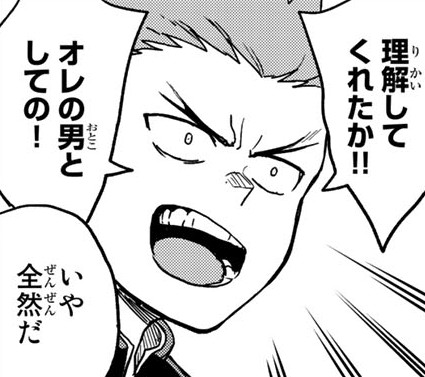
Sakurako tells Takeru not to go to the shogi club as he’ll get in the way of Ayumu being with Urushi. However, as a new member of shogi club, and as a man, Takeru feels it’s his duty to show up. On his way to the shogi club room, he encounters Ayumu who implores him to come to the shogi club room.
- タケル:
- 「理解してくれたか!!」
- “You understood me, huh?”
- 「オレの男としての!」
- “As a man, my (duty)!”
- 歩:
- 「いや全然だ」
- “No, not at all.”
理解 conveys (Takeru’s belief) that Ayumu has grasped and understood his resolve as a man.
誤解: Misunderstanding
誤解 means to misinterpret something.
It combines 誤 (incorrect) and 解 (understand) to show an misinterpreration or misunderstanding of something.
Misunderstanding an incriminating situation with 誤解
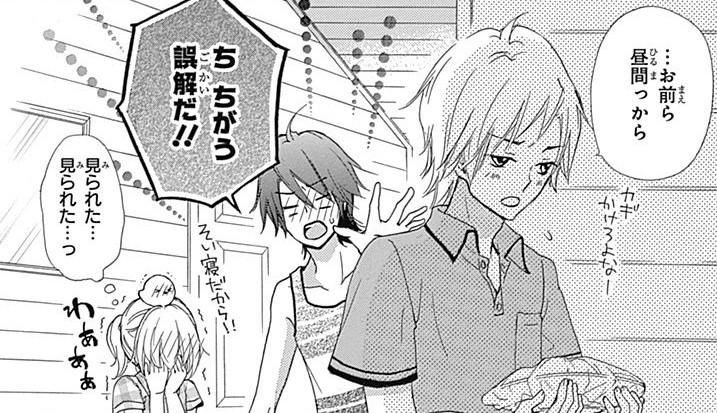
Since Hiyori is resting on a bed inside, Junpei takes a plate from the barbecue to her room. As he walks in, he finds Hiyori and Yuushin in what looks like a compromising position.
- 淳平:
- 「…お前ら昼間っから (カギかけるよなー)」
- “You guys, in the middle of the day… (At least lock the door!)”
- 結心:
- 「ち ちかう 誤解だ!!(そい寝だから!!)」
- “N—No! You’ve got it wrong!! (We were just lying down together!)”
- ひより:
- 「見られた… 見られた…っ」
- “We were seen… We were seen…!”
誤解 implies that Junpei has incorrectly interpreted the situation.
解決: Resolution
解決 means to resolve or settle a problem or conflict. It involves not only understanding something, but taking action to bring it to a clear and finished state. It is often used for problems that require a concrete outcome.
It combines 解 (understand) with 決 (decide) to show a resolution through deciding the solution.
Resolving the case with 解決
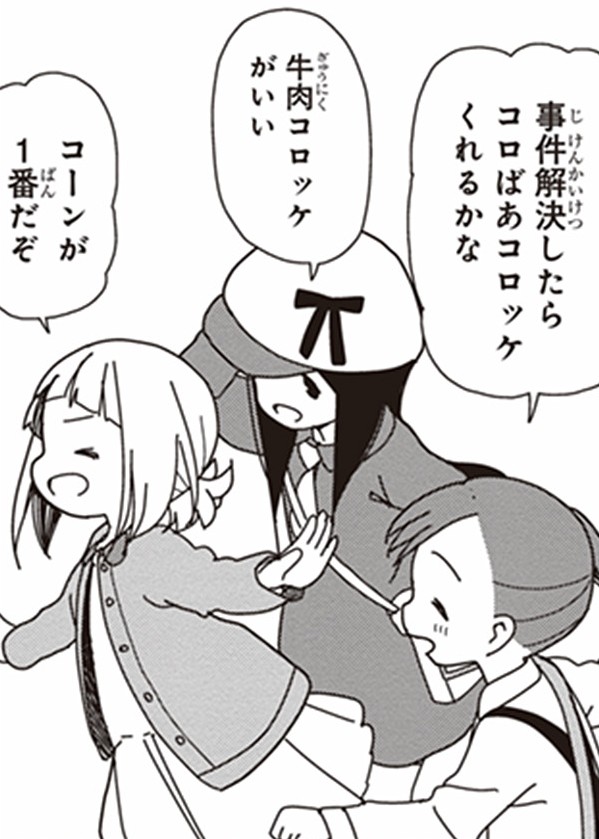
Kotoha brings news that the old woman who runs the croquette shop has a cause for Colors. The trio heads out to the shop to get the details.
- 結衣:
- 「事件解決したらコロばあコロッケくれるかな」
- “If we resolve the case, will she give us croquettes?”
- 琴葉:
- 「牛肉コロッケがいい」
- “Beef croquette would be nice.”
- さっちゃん:
- 「コーンが1番だぞ」
- “Corn is best!”
解決 here means to bring resolution to the issue the old woman is troubled by.
正解: Correct answer
正解 means a correct answer or correct interpretation. It refers to arriving at the right conclusion, solution, or understanding based on accurate information or reasoning. It’s often used in quizzes and puzzles where there is a clearly defined “right” result.
It combines 正 (correct) with 解 (understand) to show a correct understanding or correct solution.
The correct ingredient with 正解
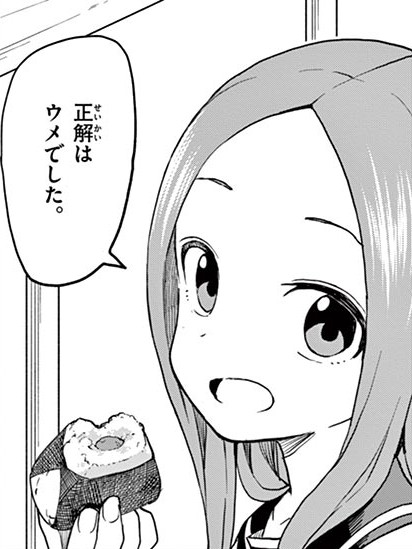
Takagi challenges Nishikata to guess what ingredient is inside a riceball in her lunch box. Seeing a bit of salmon from the other riceball, Nishika goes with salmon as his guess.
- 高木:
- 「正解はウメでした。」
- “The correct answer was apricot.”
正解 notes the one and only correct answer.
了解: Complete understanding and acknowledgement
了解 means to grasp or comprehend something clearly and fully, especially facts, situations, or instructions. This is often a practical or situational understanding rather than deep intellectual analysis.
It is commonly used alone (or with a form of する) to signify acknowledgment, similar to saying “Understood” in English.
It combines 了 (complete or finish) with 解 (understand) to show a full comprehension.
Grocery shopping plan understood with 了解
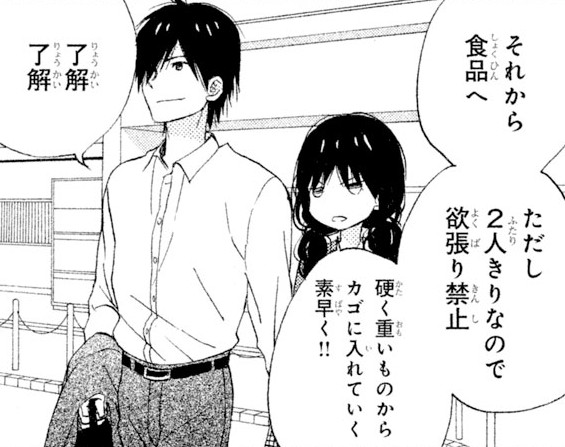
Mao needs Hiro to go grocery shopping with her due to a sale that’s limited per customer. She tells him the plan is to start by grabbing everyday household items first.
- 真魚:
- 「それから食品へ」
- “Then move on to food.”
- 「ただし2人きりなので欲張り禁止」
- “But since it's just the two of us, no hoarding allowed!”
- 基:
- 「硬く重いものからカゴに入れていく素早く!!」
- “Quickly start putting hard, heavy items into the basket!!”
- 基:
- 「了解 了解」
- “Roger that.
了解 conveys that Hiro fully understands the plan.
解釈: Interpretation
解釈 means to interpret, explain, or give the meaning of something. It involves analyzing the content deeply and providing a specific reading or clarification, often with a subjective or contextual angle. This goes beyond simple comprehension to articulating one’s understanding.
It combines 解 (understand) with 釈 (explain) to show an understanding through explanation.
Interpretating dancing flower petals with 解釈
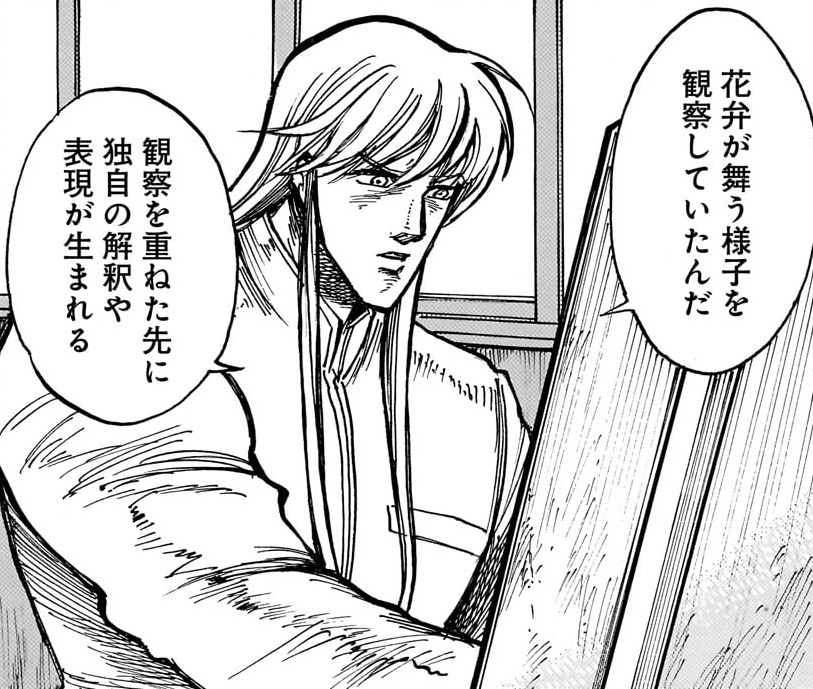
As she models for a sketch, Lulu recalls seeing Hideki blowing flower petals into the air. She brings it up to him.
- 秀樹:
- 「花弁が舞う様子を検察していたんだ」
- “I was observing the petals as they danced.”
- 「観察を重ねた先に独自の解釈や表現が生まれる」
- “Through repeated observation, unique interpretations and expressions emerge.”
解釈 here refers to the interpretation he gains in the art of flower petals as they dance through the air.
解剖: Dissection
解剖 means to dissect, analyze, or examine something in detail. It is often used in medical contexts for anatomical dissection, but can also be applied metaphorically to analyzing a problem or situation thoroughly.
It combines 解 (understand) with 剖 (cut open) to show an understanding through cutting open, breaking something down in order to examine and comprehend its parts.
Determining the cause of death with 解剖
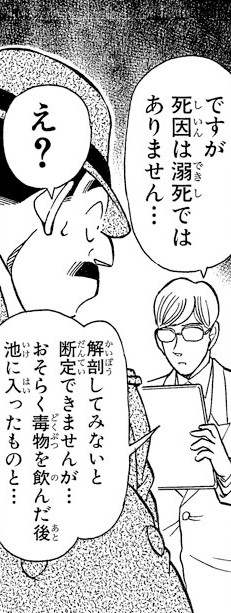
Inspector Megure suggests the murder suspect committed suicide by drowning himself. The medical examiner suggests otherwise.
- 監察医:
- 「ですが死因は溺死ではありません…」
- “However, drowning wasn't the cause of death...”
- 目暮:
- 「え?」
- “What?”
- 監察医:
- 「解剖してみないと断定できませんが… おそらく毒物を飲んだあと池に入ったものと…」
- “I can't say for certain without an autopsy... but it's likely he took poison and then entered the pond...”
解剖 here refers to performing an autopsy on the body to determine the cause of death.
分解: Decomposition
分解 means to break something down into parts, analyze, or disassemble it. It involves separating a whole into its components in order to understand, inspect, or solve a problem.
It combines 分 (divide) with 解 (understand) to show an understanding by dividing or breaking down into parts.
Breaking down grease with 分解
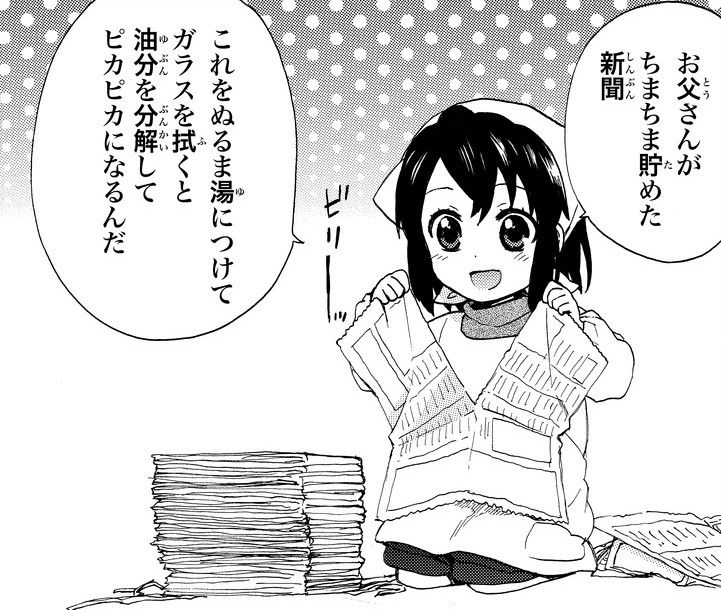
Hinata dedicates the month of December to giving her home a complete cleaning.
- ひなた:
- 「お父さんがちまちま貯めた新聞…」
- “The old newspapers Dad's been saving forever...”
- 「これをぬるま湯につけてガラスを拭くと油分を分解してピカピカになるんだ」
- “Soak them in warm water and wipe the glass, and they cut through the grease and get it sparkling clean.”
分解 refers to the grease being broken down by the warm water on the newspapers.
解放: Liberation
解放 means to remove constraints, so that something can exist or more freely again. It can refer to physical freedom (freeing a person, animal, or object), social or political liberation, or mental/emotional release (letting go of tension, stress, or fixed ideas).
It combines 解 (untie) with 放 (remove) to show a release by undoing what binds or restricts.
Liberated from a life of paying rent with 解放
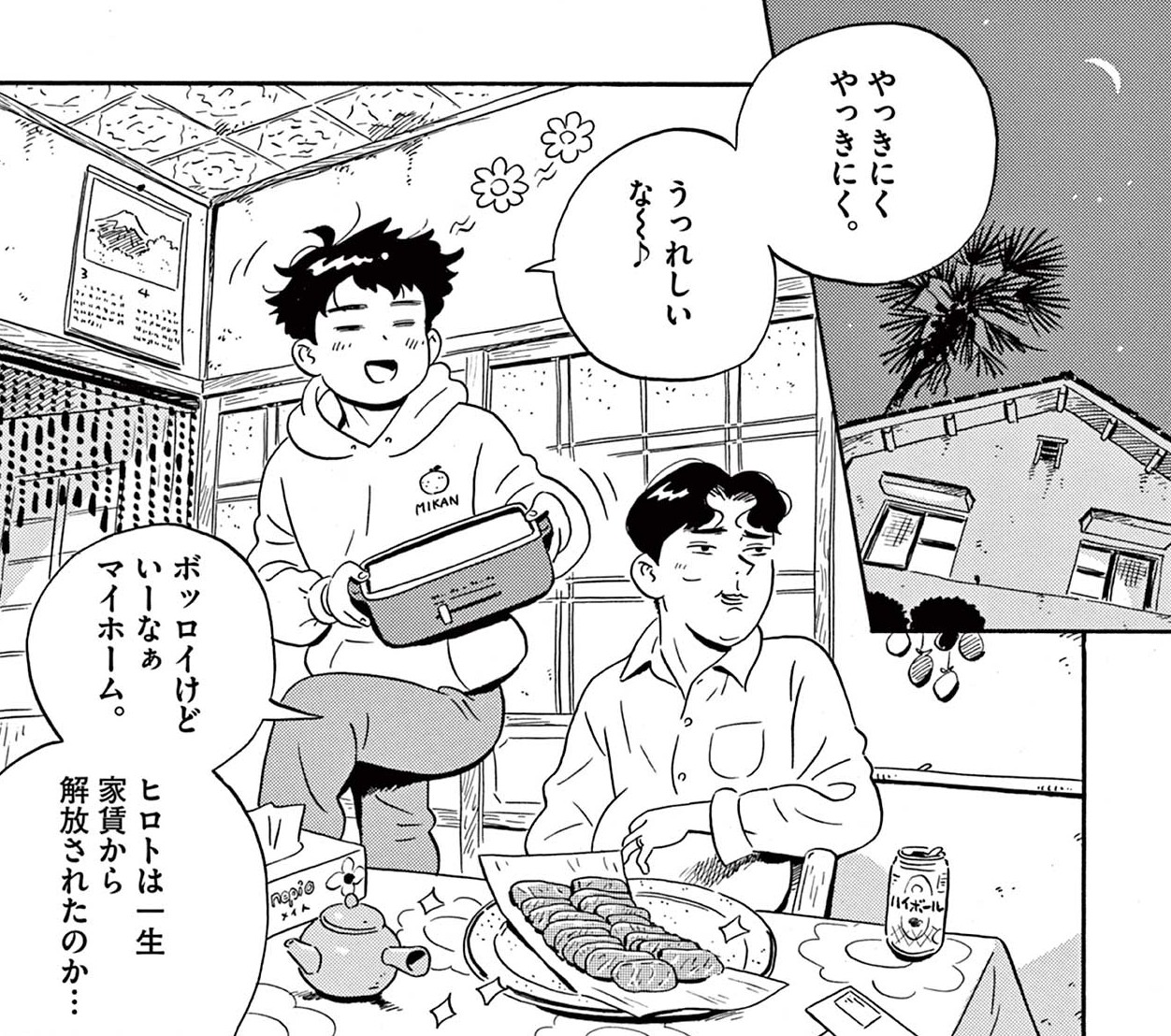
Hiroto’s friend Hideki stops by Hiroto’s workplace looking for a place to stay for the night. He has with him a shopping bag with beef.
- ヒロト:
- 「やっきにく やっきにく。うっれしいな〜♪」
- “Grilllled meat, grilllled. So happy~~♪”
- ヒデキ:
- 「ボッロイけどいーなぁマイホーム。」
- “It's a bit run down, but how nice, having your own home.”
- 「ヒロトは一生家賃から解放されたのか…」
- “Have you been freed from rent forever...?”
解放 conveys the freedom from the constraints of having to pay rent.
解除: Cancellation
解除 means to cancel, rescind, or lift something, such as a contract, ban, restriction, or alert. It involves removing or abolishing a previously imposed binding, obligation, or prohibition, thereby releasing the affected party.
It combines 解 (untie) with 除 (remove) to show a release by removing what binds or restricts.
Deactivating a bomb with 解除
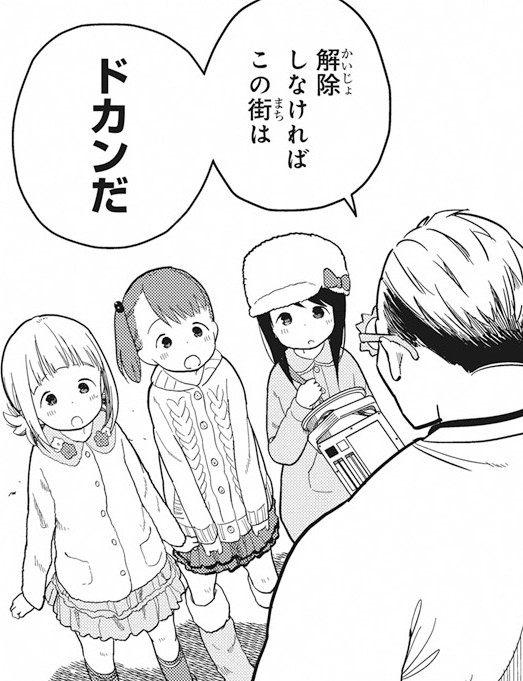
A shop owner tells the Colors trio that he’s crafted a bomb.
- おやじ:
- 「解除しなければこの街はドカンだ」
- “If you're not able to deactivate it, this district will go kaboom!”
解除 here refers to deactivating (canceling) the bomb.
解散: Dissolution
解散 means to dissolve or disband a group, organization, or meeting. It refers to the official termination of a collective body, causing its members to disperse and its activities to end. The focus is on something that was once unified no longer functioning as a single unit.
It combines 解 (untie) with 散 (scatter) to show a dissolution through loosening ties and scattering.
Disbanding a music group with 解散
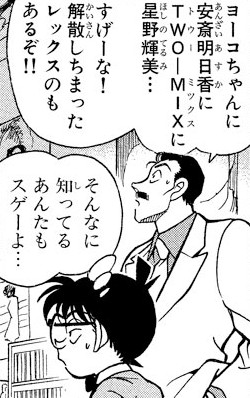
Detective Kogoro gives a young woman a ride home in exchange for concert tickets. While waiting for her to get the tickets, Kogoro notices the livingroom is filled with pop star posters.
- 小五郎:
- 「ヨーコちゃんに安斎明日香にTWO―MIXに星野輝美…」
- “There's Yoko, and Asuka Anzai, and Two-Mix, and Terumi Hoshino...”
- 「すげーな!解散しちまったレックスのもあるぞ!!」
- “Amazing! There's even the disbanded group Lex!”
- コナン:
- 「そんなに知ってるあんたもスゲーよ…」
- “It's also amazing that you know that much about them...”
解散 here refers to the music group having disbanded, which was prompted by the death of the of the members.
解消: Elimination
解消 means to dissolve, cancel, or eliminate something. It is commonly used for terminating contracts, abolishing arrangements, clearing up misunderstandings, or relieving stress and concerns by making them completely disappear. It emphasizes removing or dissolving an undesirable state rather than just resolving it.
It combines 解 (untie) with 消 (disappear) to show a dissolution through solving.
Relieving stress with 解消
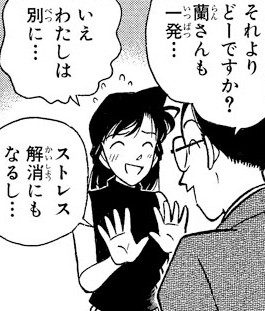
Kogorao, Ran, and Conan are at a convention for game software makers, since Kogoro helped as a consultant for a murder mystery video game. There, a punch strength test game catches Ran’s eye. She sees one of the developers throw a punch at it.
- 竹下:
- 「それよりとーですか?蘭さんも一発…」
- “What about you? Would you like to take a shot at it, too?”
- 蘭:
- 「いえ わたしは別に」
- “No, I'm not particularly...”
- 竹下:
- 「ストレス解消にもなるし…」
- “It's also a great way to relieve stress...”
解消 here refers to eliminating feelings of stress.